Date harvest time for export
Dates are one of the most important export products of Iran, which is exported every year to various countries such as India, Turkey, Russia and the Persian Gulf countries, but what many novice producers and exporters do not pay attention to is the appropriate time to harvest dates.
Early or late harvesting can cause a decrease in quality, a decrease in shelf life, damage to the product during transportation, and even the return of the export load. For this reason, knowing the exact time to harvest dates is very important for exports.
Why is the date harvest time important for exports?
In the domestic market, slightly soft or even overripe dates may still be sold, but in export markets, the situation is completely different. Foreign buyers are usually very sensitive to the appearance and shelf life of the product, and pay special attention to things such as the right size of the date, uniform color, standard moisture content, skin health, and product resistance to long-term transportation.
For this reason, if the dates are not harvested at the right time, various problems may reduce the quality of the product. Cracked skin, date sap, mold, crushing in packaging, and loss of appearance are among the most important problems that can reduce the export value of the product. In many cases, this issue causes a drop in the price of dates in foreign markets and even dissatisfaction with buyers.Therefore, choosing the right time to harvest dates plays a very important role in maintaining quality, increasing shelf life, and increasing export profitability.
Date ripening stages
Dates go through several stages of growth and maturation before being harvested. Understanding these stages will help you determine the best time to harvest.
-
The Kimri stage
The kimri stage is the first stage of date growth, in which the fruit appears green, firm, and immature. At this stage, the moisture content of the date is very high and its sugars are not yet fully formed, which is why the taste of the date is slightly sweet and sometimes bitter. During this period, the date is mostly increasing in volume and initial growth and is not yet of the quality required for consumption or export. Harvesting dates at the kimri stage can cause a decrease in quality, a decrease in commercial value, and buyer dissatisfaction. For this reason, palm growers usually wait until the dates enter the next stages of ripening and sweetening.
2. The Khalal stage
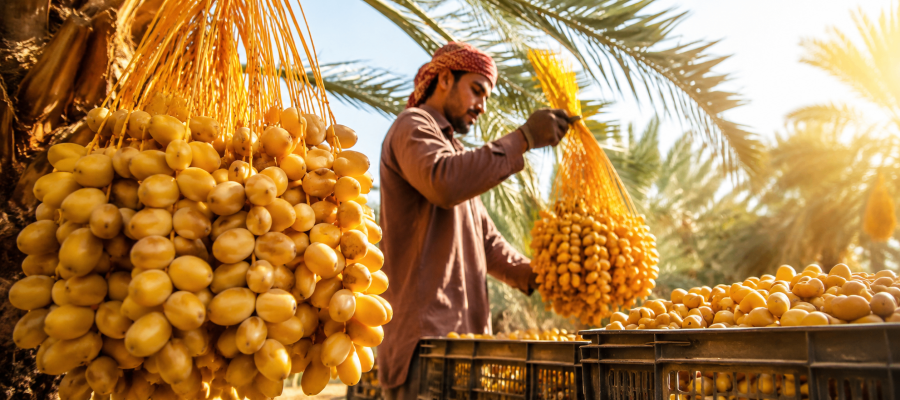
During the Khalal stage, the date gradually becomes unripe and changes color from green to yellow, red, or orange. At this stage, the sweetness of the date has increased, but its texture is still relatively firm and crunchy. The date becomes more beautiful in the Khalal stage, and certain varieties are consumed at this time due to their desirable flavor and crunchy texture. However, most dates are not yet ready for final export, because their moisture content and ripeness have not reached the standard. Palm growers usually wait until the dates enter the next stages and acquire better quality for the export market.
3.The Rutab stage
During The Rutab stage, the dates are highly ripe and their texture becomes softer and juicier. At this time, the sweetness of the dates increases and their taste becomes much more pleasant than in the previous stages. The color of the dates also becomes darker and their appearance becomes more ripe. Despite the high taste quality, the moisture content of the dates is higher during the rutab stage, which reduces their shelf life. For this reason, wet dates are more sensitive to heat, pressure, and transportation and require standard storage and packaging for export.
4.The Tamar stage
The tamar stage is the last stage of ripening of dates, and most export dates, such as Piarom and Zahedi dates, are harvested at this time. At this stage, the dates are fully ripe, their color darkens, and their texture becomes semi-dry or dry. The moisture content of the dates decreases compared to the rutab stage, which increases their shelf life and resistance to spoilage.
Dates at the tamar stage are better transportable and less damaged on long export routes. Also, the likelihood of juice leakage, crushing, and spoilage of the product is lower at this stage, which is why many exporters prefer to harvest and package dates at this time. Good appearance quality, high shelf life, and the possibility of long storage are considered the most important characteristics of dates at the tamar stage.
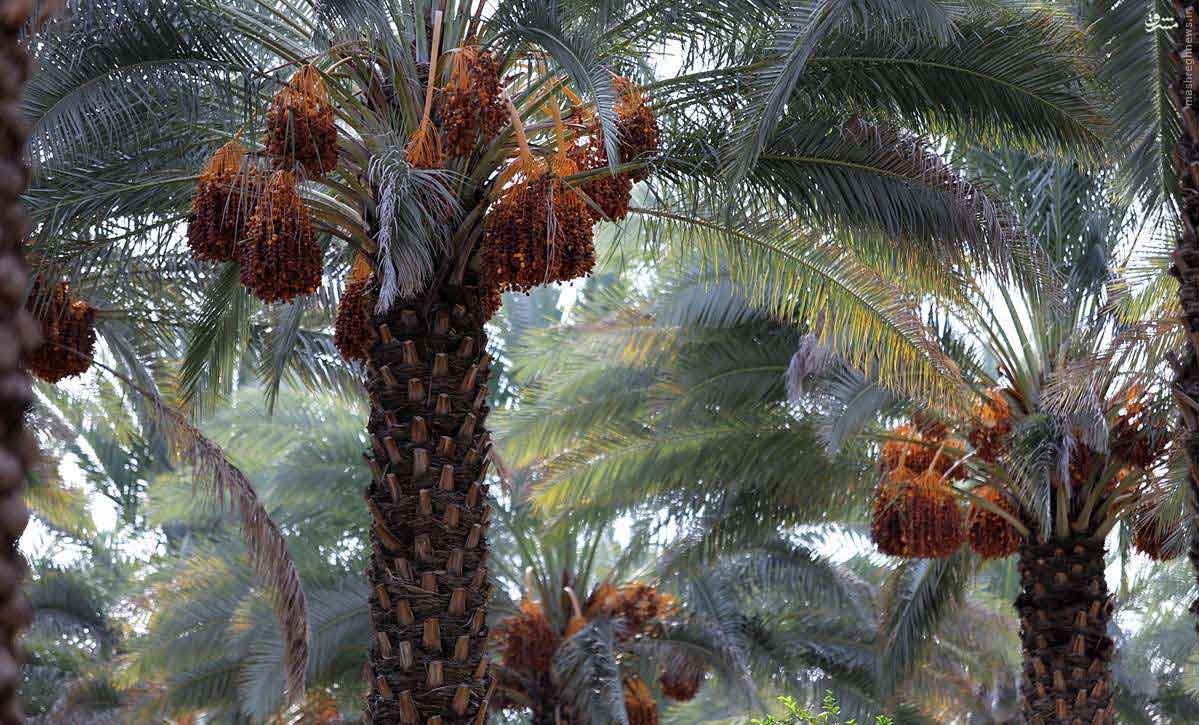
The best time to harvest dates for export
The right time to harvest dates for export depends on various factors, and there is no fixed time for all date varieties. The type of date variety, the weather conditions of the region, the country of destination, the packaging method, and even the duration of transportation are among the most important factors that play a role in determining the harvest time.
For example, dates that are going to travel a long way for export should be harvested in conditions that will last longer and not be damaged during transportation.
In general, most export dates are harvested when about 70 to 90 percent of the fruit has reached the full ripening stage. At this time, the color of the dates is completely uniform, their moisture content is within the standard range, and the skin of the fruit has not yet separated from the date flesh.Harvesting at this stage makes the dates look more beautiful, maintain their quality in packaging, and are less likely to be damaged or spoiled during export.
The impact of weather conditions on harvest time
Climatic conditions play a very important role in determining the time of date harvest, and climate changes can directly affect the quality of the product. Factors such as rainfall, humidity, storms, and extreme heat are among the most important that change the time of date harvest. For example, if rainfall begins early, farmers are usually forced to harvest dates faster to avoid damage to the crop. Excessive rain and humidity can cause fermentation, mold, cracking, and a decrease in the appearance of dates. Extreme heat or stormy winds can also damage the fruit and reduce its shelf life. For this reason, professional palm growers always carefully monitor weather conditions to choose the best time to harvest export dates.
Signs of dates suitable for export
A quality export date must have a healthy, attractive, and standard appearance to attract foreign buyers. Natural and uniform color, healthy, uncracked skin, proper texture, and uniform size are the most important characteristics of export dates. The dates must also be free from pests and their humidity must be controlled within the standard range so that they do not spoil during storage and transportation. Excess sap or excessive softening can also reduce the product's appearance and reduce its export value. This desirable quality can usually be achieved when the dates are harvested at the appropriate and standard time, because the time of harvest has a direct impact on the appearance, shelf life, and final quality of the product.
Common mistakes in harvesting export dates
Harvesting dates at the wrong time can have a significant impact on the quality and export value of the product. If the dates are harvested too early, their flavor will not fully develop, they will not develop the right color, and they will lose their appeal in the market. This will reduce the marketability of the dates and lower their commercial value. On the other hand, harvesting too late also has its own problems and may cause the dates to soften too much, increase sap, reduce shelf life, and even spoil the product during transportation.
In addition to the time of harvest, how the dates are stored after harvest is also very important. Even if the dates are harvested at the best possible time, improper storage, substandard temperatures, or incorrect packaging can completely destroy the quality of the product and reduce the final quality of the exported dates.
Important points after harvesting dates for export
After harvesting, dates must enter the processing and storage stages as soon as possible to maintain their export quality. First, the dates are sorted to separate healthy, uniform, and high-quality products from damaged or unsuitable dates. Then, a washing and disinfection step is performed to remove any contamination, dust, or spoilage agents. After that, the dates must be dried in a standard manner to control their moisture content and increase the shelf life of the product.
Hygienic and proper packaging also plays a very important role in maintaining the appearance and quality of dates, because the product must be resistant to pressure, heat, and pollution during export transportation. Also, storing dates at the appropriate temperature is very important, especially for soft and sensitive varieties such as Mazafati dates.Due to their higher humidity, this type of date almost always requires cold storage to maintain quality and prevent spoilage.
summary
The time of date harvest is one of the most important factors in the success of exporting this product because proper and timely harvesting has a direct impact on the final quality of the dates. When dates are harvested at a standard stage, the quality and appearance of the product are better preserved, its shelf life is increased, and the dates will be less likely to be damaged, spoiled, or lose quality during export transportation. This also increases the value and export price of the product and attracts more satisfaction from foreign buyers.
Considering the importance of quality in date exports, Kimia Zarrin Bahadur Group always strives to offer products that are harvested at the best time and meet the necessary standards for international markets. Adhering to the correct principles of harvesting, storage, and packaging can play an important role in increasing Iran's share in the global date market and increasing the profitability of exporters.